Budget 3–4 hours if you’re going up from Kriens and back without lingering, or 5–6 hours for the full Lucerne loop with connections and time at Fräkmüntegg. The big variable is whether you stop for lunch, walk to Tomlishorn, or wait for the cogwheel railway in peak summer.
Is Mount Pilatus worth visiting?
Cloud shadows drift across the limestone ridge, cowbells fade below, and suddenly the view opens to Lake Lucerne and a ring of Alpine peaks. What makes Pilatus memorable is how quickly it transforms from an easy city escape into dramatic mountain scenery.
Once remote, Pilatus became Lucerne’s signature mountain thanks to the 1889 cogwheel railway and later cableways, making its rugged summit accessible without losing its wild appeal.
Expect a mix of experiences in one trip: a record-setting cogwheel railway, panoramic cable cars, summit terraces, ridge walks, and family-friendly attractions—all within easy reach of the city.
Skip it if: you're seeking a remote wilderness hike or visiting mainly for long-range views on a day with poor visibility.
What can you see on Mount Pilatus?
1/7
Krienseregg
The first stop above Kriens is the family-friendly pause point: forest walks, meadow views, picnic tables, and Pilu Land’s dragon-themed playground. If you’re traveling with children, this is where the day can slow down happily.
Fräkmüntegg
Pilatus’s adventure station packs the rope park, summer toboggan run, winter sledding, and a large terrace restaurant into 1 stop. If the weather is good, many visitors regret rushing straight past it.
Dragon Ride
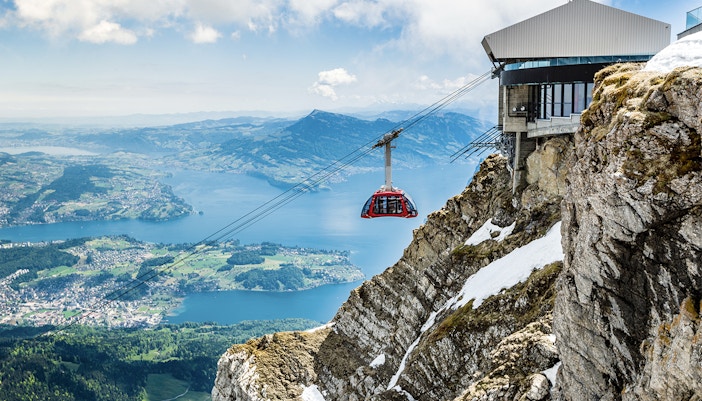
The final cableway to Pilatus Kulm lasts only a few minutes, but it’s 1 of the most dramatic parts of the trip. The oversized windows put cliffs, forest, and Lake Lucerne directly in your line of sight.
Pilatus Kulm terraces
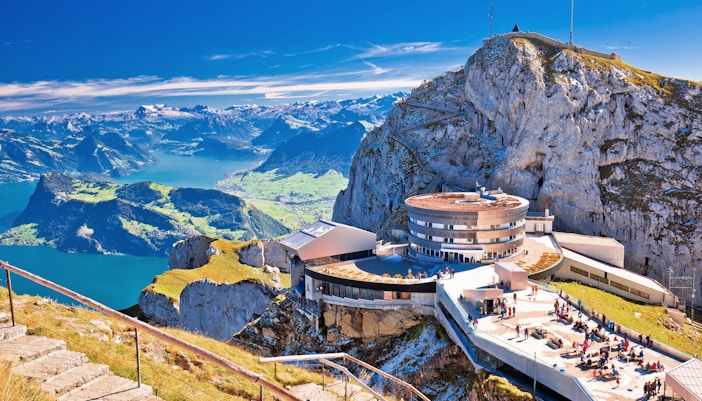
This is the summit heart of the visit: hotel terraces, broad viewing decks, and the first full panorama over Lake Lucerne and Central Switzerland. On clear days, you can pick out peak after peak in every direction.
Dragon Trail
A short summit path with tunnels, rock passages, and myth-heavy panels explaining Pilatus’s dragon legends. It doesn’t take long, but it adds personality to the mountain and works well even if you’re not up for a longer hike.
Tomlishorn trail
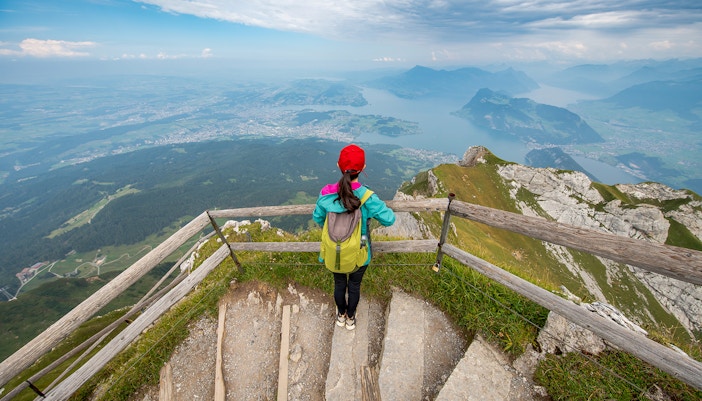
This ridge walk leads toward Pilatus’s highest point and gives the summit area more space and silence. Budget about 45–60 extra minutes; the payoff is wider Alpine views and fewer people once you leave the station behind.
The cogwheel railway
The world’s steepest cogwheel railway is more than transport. The 30-minute ride between Alpnachstad and Pilatus Kulm climbs through meadows, tunnels, and exposed slopes. In summer, midday departures can mean long waits, so earlier slots are smarter.
How to explore Mount Pilatus
Suggested route: If the cogwheel railway is operating, the smoothest route is Lucerne to Alpnachstad first, then ride the train uphill before queues build, explore Pilatus Kulm, and descend by Dragon Ride and gondolas to Kriens. That order gives you the dramatic railway ascent, then lets you break the descent at Fräkmüntegg if the weather is clear and the terrace is tempting.
Must-see: the Pilatus Kulm terraces, the Dragon Trail, and the cogwheel railway. Optional: the Tomlishorn ridge walk adds about 45–60 minutes for bigger summit views, and Fräkmüntegg adds 30–90 minutes for the rope park, toboggan, or a long lunch.
Self-paced works well here because the route is clearly signposted and the real value is moving at your own weather-dependent pace. A guided tour mainly helps if you’re coming from Zürich and want transfers handled for you.
Brief history of Mount Pilatus
- Medieval period: Local legends of dragons and the restless spirit of Pontius Pilate gave the mountain its enduring aura and its ‘Dragon Mountain’ nickname.
- 1889: The Pilatus cogwheel railway opens from Alpnachstad, creating a direct route to the summit on gradients up to 48%.
- 1890: Summit hotels open near Pilatus Kulm, turning the peak from a daring excursion into an overnight Alpine retreat.
- 20th century: Cableways from the Kriens side expand access and make Pilatus a more flexible, year-round outing from Lucerne.
- Today: The Golden Round Trip, family attractions, and panoramic terraces keep Mount Pilatus among Central Switzerland’s busiest mountain excursions.
Why Mount Pilatus is called Dragon Mountain?
Long before Pilatus became a polished day trip, people treated it with suspicion. Medieval stories claimed dragons lived in its caves, and another legend held that Pontius Pilate’s spirit haunted a mountain lake, bringing storms when disturbed. That folklore still shapes the visit today: the Dragon Trail, the Dragon Ride cableway, and children’s play areas all borrow from those stories. It gives Pilatus something many Alpine peaks lack — not just scenery, but a personality. You’re not simply visiting a mountain; you’re stepping into 1 that locals spent centuries imagining.
Frequently asked questions about Mount Pilatus
Yes. If you want a classic Swiss mountain experience without giving up an entire day, Pilatus delivers unusually well. The summit views, cogwheel railway, and cable cars give the outing far more texture than a simple viewpoint.
Most visitors need 3–4 hours from Kriens, or 5–6 hours from Lucerne for the full round trip. Add another hour if you stop at Fräkmüntegg, linger over lunch, or walk out to Tomlishorn.
Don’t skip the Pilatus Kulm terraces, the Dragon Trail, and at least 1 signature transport leg. If the cogwheel railway is running, make room for it; that ride is a major reason travelers choose Pilatus.
Yes. Pilatus works especially well for families and first-timers because the transport does the hard climbing for you. Krienseregg and Fräkmüntegg give children room to play, though ridge walks are better for older kids.
Early morning is best, especially in July and August, when summit terraces and railway queues build quickly by late morning. Clear weather matters more than season, so check visibility first and go early when the forecast looks good.
Usually, yes in summer and on clear weekends. Pre-booking helps you lock in the route that suits you.
Alpnachstad is better if the cogwheel railway is your priority. Kriens is simpler for flexible departures, easier family logistics, and year-round access via cable cars. Many visitors choose both by turning the day into a loop.
.svg?auto=compress%2Cformat&w=156&h=48&q=90&crop=faces&fit=crop)

